06 June 2012

AUNTIE PASTA: Sailor's Delight

SARONNO, Italy - The volcanic island of Pantelleria, is the largest of all the Sicilian islands. It’s a wild place, only 15 kilometers (9 miles) long in the heart of the Mediterranean Sea, closer to Africa than to Italy.  It is a place of contrasts, a place with spectacular beaches, where lush olive groves thrive and dark, rocky volcanic landscapes that make you think you have landed on the moon.
 Beautiful Panelleria
There have been people living on this island since the Bronze Age. Because of its unique position between Africa and Europe, Pantelleria has seen more than its share of sailors as it was the perfect place to stop and rest, and restock their ships. Remember these were ships which traveled by the power of the wind, or if there was no wind, by the power of the men who manned the oars.  

One tribe that came from the sea were the Sesioti. But they didn’t come to Pantelleria to rest, they came to extract a special black stone, Obsidian. This rock-glass material was used to produce sharp-edged knives, cutting tools and arrow points, and was a precious in prehistoric times as gold is today. What the Sesioti left behind were their dome shaped burial tombs, called sesi, a World Heritage treasure which are still there for all to see.
Sesi Prehistoric Burial Tomb found on Pantelleria
 But the strongest influence was left by the Arabs, who arrived in Sicily first in 827. The Berbers of North Africa named the island al Quasayra; the little one, and some still call it that. Other Africans called the island Bent-el-Rion, daughter of the wind. Both names are perfect for Pantelleria as both are true.

GRAPH The Arabs contributed the most to the culture and cuisine of Sicily and it’s islands. You hear their influence still in the Sicilian dialect of today which contains numerous words of Arabic origin. Many of these words have passed from Sicilian into standard Italian, words such as: zaffarana (saffron), sorbetto (sorbet, originally sharbaat), carciofi (artichoke, from al-khurshouf),  zucchero (sugar, from sukkar), and coucous (kuskusu). 
 Sicilian Couscous Festival
Couscous is the perfect mate for whatever meat or vegetables are available, or as the Italians say, it marries well with many things. Being an island in the Mediterranean Sea, it’s logical that the couscous served in Pantelleria is most often paired with fish. In the past, couscous was a staple of everyday life on the island, but today it has moved from the fisherman’s table to the most elegant of restaurants.

Here’s a recipe I found in an old Italian cooking magazine. Give it a try, or use it as a starting point for your own couscous creation.

Fish Couscous
Cuscus alla Pantesca

Ingredients for 4-6 people

320 grams cuscus (precooked)
600 grams mussels
600 grams red snapper (or any similar fish)
400 grams shrimp
250 grams tomatoes
2 onions
1 hot red pepper
1 garlic clove
Extra virgin olive oil
Small bunch of rucola
Salt
Clean the mussels and heat them in a casserole dish or pan until they open.

Then filter the juice and set aside. Peel the tomatoes by first dipping them in boiling water for a half a minute, then remove the seeds and rough chop.

This recipe calls for cleaning the whole fish, but it’s a lot easier if you buy fish that is already clean.

Peel the shrimp.

Finely chop the onions and garlic and fry them along with the hot pepper in 2 tablespoons of olive oil for 4-5 minutes. Then add the chopped tomatoes, and after 5 minutes add the juice you reserved from the mussels and 1 liter of water.

Bring that to a soft boil and add the red snapper, and let it simmer until cooked (about 10 minutes), adding the peeled shrimp about two minutes before you take the pan off the heat.
You can also add fried eggplant, zucchini or a handful of peas to this mix if you want.

In the meantime, prepare the couscous. Calculate 1 glass of water for each glass of couscous (or 1 cup water for 1 cup couscous).  Bring the amount of water you need to a boil, add salt, and then pour it over the couscous, turn off the heat and let sit for 8 minutes. When the couscous has absorbed the water, mix it with  a fork and add a little of the broth the fish had been cooked in. Serve the couscous with the fish and seafood and garnish with the rucola.


03 June 2012

LIFE: Fill'er Up

SARONNO, Italy – Now here’s an idea. To help spur auto sales in Italy, Fiat, the Italian (err, American) automobile maker has made an agreement with the oil company API (Anonima Petroli Italiana- Anomina Italian Petrol) to sell gasoline and diesel fuel for 1 euro a liter for three years to anyone who buys a new car.  
Fiat's new Bravo Multijet
For example, if you buy a new FIAT Bravo Multijet, you will be able to fill up your gas tank at any of the 3,700 API gas stations throughout Italy, and pay only 1 euro per liter. The difference between what you, Mr. New Car Buyer pays and what the market price of gas is, will be paid by FIAT (Fabbrica Italiana Automobili Torino, – Italian Automobile Company Turin). And the better news is, the card is valid until 2015.  

Gas prices are on everyone’s mind these days, especially with summer just around the corner, and long, lazy days at the seaside beckoning to us northern land-locked worker bees. In January 2012, average gas prices in Italy were 1.735 euro per liter for gasoline and 1.684 euros per liter for diesel. Since one US gallon is equal to 3.8 liters, a gallon of gas in Italy costs about 6.59 euros per gallon or $8.67 (using an exchange rate of 1.315, that is, $1.34 will buy you one euro).
At the Pump
For Italians it does sound like a deal, especially since a liter of gas just went up another 2 eurocents, and is slowly, albeit ever so slowly, creeping up to 2 euros a liter. What FIAT is counting on is the Italian character to always go with the safe bet. Italians may be a lot of things but they are not risk takers, or gamblers and if they can lock up a fixed price on gasoline for three years, they just might prefer to do that than take any type of immediate discount on a new car deal.

According to the technicians at FIAT, with the 1 euro a liter deal, a family would be able to drive their new FIAT 500 2 cylinder TwinAir from Milan to Naples for only 33 euros, and if they buy a Punto Multijet, it drops to 27 euros. How far is that you ask? Driving distance between Milan and Naples is 774Km / 481 miles. It’s a great savings, especially since I just paid 40 euros to go from Milan to Liguria by train, which is only 80 miles or 128.72 kilometers. 
 Jay Leno and his FIAT 500
What I don’t know, of the many things I don’t know, is if the 1 euro a liter price includes taxes or not. I think not. I also don’t know how much of the 1.735 euros per liter is tax, and how much is the pure cost of the gasoline. It’s an important component to consider as the government is getting ready to increase excise taxes to help raise money needed to rebuild the parts of Emilia hit by the recent earthquakes. That move alone is going to make the gas prices in Italy among the highest in Europe.

So while Chrysler – who is FIAT’s daddy now – is in its 25th consecutive month of growth, thanks to a smart move by Obama, the growth in Italy’s automotive market has almost slowed to a meager increase of 1.6% over last year. Not good at all.
 Making FIAT Babies
So FIAT’s new deal may seem like a good deal to new car buyers in Italy as it is part and parcel of the Italian character to always prepare for the worst. I can remember several times in the past when rumblings of a potential conflict in Northern Africa hit the media, and in less than half an hour the shelves of the grocery stores were totally devoid of pasta and cans of peeled tomatoes. War or no war, recession or no recession – you gotta put food on the table. That’s how they have survived crisis in the past, and I have to think that is how they will survive this   crisis as well. 

P.S. Thanks to all of you who wrote asking if I was OK after the earthquake last week. I was on the Riviera when it happened and while there were several reports of tremors, I didn't feel or see any evidence of it. It is getting worrisome though.

31 May 2012

AUNTIE PASTA: Longing for Lentils

SARONNO, Italy - The Italian island of Ventotene is not exactly a household name. It’s a tiny little volcanic island in the Tyrrhenian Sea, 25 nautical miles off the coast of Gaeta, right at the border between Lazio and Campania. The island is less than 2 miles long (3 kilometers) and less than half a mile wide (800 meters). Today, 708 people call Ventotene home, but back in the days of the Roman Empire, Ventotene was not a place you wanted to be, in fact you could say it was an ancient Alcatraz.
 Island of Ventotene
It was called Pandataria back then, and it was a strategic maritime hub that anchored the Roman trading empire. The Emperor Augustus radically transformed this remote barren island into his personal seaside resort and a thriving port community. Engineers of today marvel at what the Emperor constructed 2000 years ago, including a system of underground aqueducts that harvested rainwater and an impressive man-made harbor, hand-carved from the seawalls. 

Augustus may have turned the island into a thriving resort, but it soon became infamous as the island where he banished his daughter Julia in 2 BC. It seems Julia was the Paris Hilton of her day, and her father did not approve of her wild and wooly ways. He decided that perhaps she needed a time out, a five year time out, and so she was sent to Ventotene to rethink her behavior.
Julia

Apparently banishing unruly children was the thing to do back in those days because the Emperor Tiberius banished his grandniece Agrippina the Elder to Ventotene. And Agrippina’s youngest daughter Julia Livilla was also exiled there – twice. Then there was Claudia Octavia, the first wife of the Emperor Nero. She was banished to Ventotene in 62 AD and even Saint Flavia Domitilla, the granddaughter of the Emperor Vespasian, was banished to the island. She is the same Saint Flavia Domitilla the catacombs in Rome are named after.

So it is easy to see why, in the past, people were not exactly rushing to go to Ventotene, especially women.

But that’s all changed. Today, Ventotene is once again a resort island made newly famous as the place where five ancient Roman ships were recently discovered. The ships are between 1,600 and 1,900 years old, and were laden with - among other things - wine, olive oil and a fish sauce called garum, which is much like the fish sauce used today in Asian cooking. 

It was not easy to grow food or develop a cuisine on an island made of volcanic rock, but with a little help, one plant seemed to thrive, red lentils. And from the red lentils, the Ventotenese made zuppa – soup. This is a perfect summer dish as it is served, like so many Italian soups, at room temperature.
Zuppa di Lenticchie di Ventotene

Serves 4
250 grams of lentils (any color will do)
350 grams of tomatoes
1 garlic clove
1 bay leaf (or a few basil leaves)
Extra virgin olive oil
Salt

The original recipe calls for dipping the tomatoes in boiling water for a half a minute and peeling them, cutting them into quarters, removing the seeds and dicing them. Honestly, you can use any good quality canned tomatoes and save yourself a lot of time and still get good results. 


Lentil Soup
Carefully check the lentils to eliminate any tiny stones or foreign debris, and then wash them in abundant water.

Put the lentils, the garlic clove and the chopped tomatoes in a casserole dish with about 2 liters of water. Bring it to a boil and then lower the heat and let it cook for about 45 minutes (or until the lentils are tender, but not mushy). Add a little more boiling water if needed. 

When the lentils are cooked, add salt and serve the soup in a shallow bowl with an added drizzle of olive oil. Serve at room temperature. If you want, you can also add some cooked rice to this dish.

27 May 2012

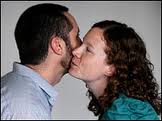
LIFE Give Me a Little Kiss

SARONNO, Italy – Had to laugh at how shocked Will Smith was when the reporter kissed him on both cheeks. He (Will Smith) took it as a personal affront and reacted by slapping the guy. I’m sure the reporter was stunned by Smith’s reaction since cheek kissing – one on each side - is a normal greeting in many parts of the world, Italy for one, the rest of Europe, the Middle East and Latin America too. Even in Quebec, Canada it is normal for people to give each other “un bec.”
You Do It Like This
It’s as common as shaking hands, a standard greeting among friends, both male and female, young and old. But there is a right and wrong way. The trick is to lean forward, turn your head and lightly touch the other persons cheek with yours, first the right cheek and then the left.  You can actually kiss them (barely a touch) if you are close friends, or fond of each other, or just air kiss. 

Here in Italy, the two kiss is standard, I’ve also seen three. In France sometimes they do four, it’s called “faire le bise.” The number of kisses  varies from country to country, but they do kiss. Which is why I’m sure the reporter was taken aback by Will Smith’s reaction. Smith looked like he though the guy was putting a move on him, while nothing could have been further from the truth. 
Poor Will Smith, He Was All Confused
In Central and South America, they are not quite as kissy as Europeans so they only give one kiss, usually on the right cheek, unless of course the person is a complete stranger. Complete strangers get no kisses, they get a handshake. The next time they meet they may kiss, but no kissing on the first encounter. 

Cheek kissing between men is less common in Central and South America, it’s that macho thing, you know, except in Argentina, Chile and Uruguay where it’s common between men friends to kiss “a la italiana.”  This can get a little tricky if one person is trying for a cheek kiss with someone who’s trying for a handshake.
Don't know what the green thing is, but it's the only photo I could find of two guys
So, Will Smith, the guy wasn’t trying to put a move on you, he was simply trying to show you he likes you by greeting you in the way he knows best, although in most cultures, cheek kissing is reserved for people who actually know each other. The Spanish and Portuguese are the exception. Those hot blooded Latins always kiss women, even those they are meeting for the first time. Men, don’t kiss so much, but men hugging each other is very popular. It's probably a good thing the reporter didn't try to hug Will Smith. He might have gotten a punch in the nose instead of a sissy slap.

The only exception is the UK where cheek kissing is reserved for family and friends – but not necessarily men. In fact the video is from a UK business training site and it shows the right and wrong way to cheek kiss in a business/social setting. 

20 May 2012

LIFE: Underground

SARONNO, Italy –  Last January, when they were working on the restoration of the large  bronze statue of King Vittorio Emanuele in Milan’s Piazza Duomo, they found a tunnel under the statue. Now they’ve found seven rooms. The rooms are all interconnected to the central vertical shaft, which was used to lower workers inside the statue. They also found the point where, in all probability, the last worker left after completing the work. Why they are there is a mystery. No one knew about them, not even the City of Milan.  
Piaza Duomo, Milan - Statue of Vittorio Emanuele on the right
 Secret tunnels are nothing new in Milan. There are secret tunnels in other parts of the city as well. Under the Sforza Castle, for example, there’s a tunnel which Leonardo da Vinci called the ‘strada secreto dentro’, the secret street below’. No doubt it was the ace up Duke Ludovico Sforza’s velvet sleeve as the Duchy of Milan was not only a hotbed of local uprisings but a prime target for outsiders, ready to attack at the first sign of weakness. No doubt the secret road was his plan B,  for in those wild and wooly days, you just never knew when it would be prudent to slip out the back door and take the secret road out of town.
 Sforza Castle in Vigevano
Ludovico applied the same strategy in Vigevano. At that castle, his favorite, there are underground tunnels that lead to a wide, covered road that run from the center of the castle to the outer edges of the town. Leonardo da Vinci was working for the Duke when he remodeled the castle in Vigevano, and designed the royal stable. (See http://thisitalianlife.blogspot.it/2010/01/on-road-vigevano.html ) 

There are also tunnels under Duomo of Milan. Most of the tunnels were built in secrecy so it’s difficult to know if they were built when they were building the Duomo, during the time of Duke Ludovico, or later. Were they built to save the treasures of the Duomo in case of an all-out attack, which in actually did happen in 1499, when the French King Charles VIII invaded Milan, or later, and used when Napoleon Bonaparte invaded the city in 1796? 

But it doesn’t end there. There are also secret tunnels under Milan’s Chamber of Commerce. As much as I would like to think that they were built in an attempt to save the Chamber member’s skin from hostile crowds, the tunnels were, in fact, built a long time before the Chamber moved to that location. So, whoever was there first, felt the need to have a secret get-a-way just in case they got caught doing what they shouldn’t have been doing, or maybe not. Maybe that’s just my imagination at work.
The Pope's Fortress - Castel Sant'Angelo
Truth is, there are secret tunnels and getaways under most Italian cities. In Rome, there is a secret passage  from the Vatican to Castel Sant’Angelo. Some records claim it was built by Nicholas III in 1277,  but others say it was built by the anti-pope John XXIII (1410-15). What is certain is it was repaired by the Borgia Pope, Alexander VI, later in the fifteenth century. The narrow corridor was built within the thickness of the wall and during the sack of Rome in 1527, it enabled Pope Clement VII to escape the Vatican and take refuge in Castel S. Angelo.  
  
The tunnels were often used as secret escape routes, but in Turin, the King used his tunnels as storerooms for wine and cheese and other foods. He also put his alchemists down there, under the city, to mix and stir and brew potions, with the ultimate goal of discovering the secret of how to turn base metals into gold. They never did, of course, but it couldn’t have been easy climbing out from the dank and dark tunnels every day with the King waiting at the other end.

Gold Plaques on Royal Palace Gate in Turin
You can tour the tunnels under Turin, it’s a fascinating world. You can also tour the tunnels under Naples, but those were built for still another reason. The Naples tunnels were built by the Romans to carry water to houses throughout the city.  
  
These stories fascinate me, all of the stories fascinate me, they are part of the joy of this Italian life.

17 May 2012

AUNTIE PASTA: Too Italian

SARONNO, Italy -  I was looking through some of my cookbooks the other day, kind of browsing for an idea for this week’s column, when I realized that I was automatically excluding a lot of recipes. I was deciding what recipes you would like and which you wouldn’t like. 
 This May Look Like a Dog's Dinner But it's Really Beef Pizzaiola
Some of the recipes had inherent problems simply because the ingredients would be hard to find outside of Italy – roast piglet for example, a simple recipe which starts with: carefully clean and wash the piglet, take out the entrails and rub it first with lard, inside and out, and then with salt and pepper. Another recipes I think is too Italian, which is the exact opposite of not being “Italian enough, like roast chicken, is roast pajata. That recipe starts with: take the skin off the entrails and cut them into long slices which you will tie into rings and sprinkle with vinegar. What are entrails, you ask? Intestines. 

There are more recipes that are too Italian than there are of those where the ingredients would be difficult to find.  I was thinking about this because I talked to my cousin Ginny today and it got me thinking about the time she came to Milan to see me. As it happened I was going to a luncheon that day, so knowing she was flying in, I made a reservation for her as well. 
 The Ingredients for a Delicious Octopus Salad
When we arrived at the hotel and everyone was seated at the table, the waiter brought out the first course: an antipasto of seafood salad. There may have been a mussel or two in that salad, but what I remember most is the look on Ginny’s face as she looked down at the cold octopus tentacles in her plate that had been lovingly dressed with a little olive oil and a squeeze of lemon.

She told me later that looking around the table at the mostly non-Italian women, she didn’t think anyone was going to eat the starter, but when she looked again everyone had cleaned their plate, including me.  I was happy for the cook, because preparing an octopus is a lot of work. It’s not like you just cut it all up into little bits and throw it on a plate. 
Octopus Salad  Looks a Little Better When It's Served
First you have to remove the eyes and then the beak in the center of the tentacles. Then you have to turn the head and take out the bag of black ink that the octopus carries around with him so he can let out a spray of black ink if another fish is closing in and trying to eat him. He’s like the James Bond of the fish world.  Anyway, you must take the ink sack off and then pull out the intestines. After you have given your octopus a quick wash,  you have to beat the beast with a rolling pin for a very long time in order to make the flesh more tender. 

Somehow I don’t think it’s worth continuing with that recipe, so let’s move on to something else, something I know my friends and family would actually eat: Carne Pizzaiola.

This is a simple and fast recipe that is also very tasty because the meat is cooked in tomato sauce and flavored with parsley and oregano. You can serve ‘pizzaiola’ with mashed potatoes, or rice or even cous cous, it goes with just about everything.

 Ingredients
2 cloves of garlic (peeled)
600-800 grams of beef slices (500 grams equals 1 lb.)
4 tablespoons of extra virgin olive oil
Freshly ground pepper
Salt
400 ml of tomato sauce
2 tablespoons of parsley
Salt Q.B.


In a good size frying pan, put the olive oil (1), the garlic (2) and let the garlic cook until it is golden brown. When it is golden, add the tomato sauce (3),


The oregano (4), the parsely (5), and the salt. Let it cook for a few minutes until the tomato sauce starts to thicken a little. Then, if you have not already beaten the beef slices to a uniform thickness, do that now (6),  


And then add the meat to the tomato sauce (7) and mix it well so that the meat is well covered with the tomato sauce (8). Cover the pan (9) and let it cook for about 6 or 7 minutes. At this point, turn the meat slices over, cover the pan again, and let them cook for an additional 5-6 minutes. Add salt and pepper to taste. The trick is not to cook the meat too long or It will become tough. Serve immediately.
(photos from: yellow saffron)

13 May 2012

LIFE: Give Me the Simple Life

SARONNO, Italy – So I spent much of yesterday just looking at all my ‘stuff’ and wondering how I am going to fit everything into a one bedroom apartment. I’m trying to get my head wrapped around moving into a much smaller space in my new push to simplify my life.
Piazza Sant'Ignazio, Rome
I’ve already cleaned out the book cases and the closets, or at least I thought I had cleaned out the closets until I came across a large plastic bag filled with un-ironed tablecloths. Storing table cloths un-ironed is an old habit I acquired somewhere along the way when I didn’t have enough room to properly store them ironed.  I figured one ironing was just about all the effort I wanted to put into a tablecloth. 

During the past couple of months that I’ve been apartment hunting, I’ve become more and more concerned. It’s obvious I have too much furniture and in spite of my gargantuan effort to clean stuff out, I still have too many clothes.  I also have to re-think my office space and decide if I really need to have a printer and a scanner on my desk. And what about all those shoes? 
 How Small is Too Small
In this land of wine and honey, simple storage solutions are hard to come by. This is a country that doesn’t understand closets. It’s like living in a land of turtles. When they move they take their closets - and kitchens -  with them. I’ve stopped asking why.

When I first came to look at my current apartment (which had been remodeled by an architect who obviously spent time in the USA) and the real estate agent opened the door to what was clearly a linen closet – positioned in the hallway right outside of the bathroom – and said to me, “this is for your shoes.”  It took me a minute to realize he had no idea what that space was about, nor did he know the smaller closet next to it was a utility closet, a convenient place to store a vacuum cleaner and other such things.
 Ms.Zorzo (photo Corriere della Sera)
So as I contemplate these minor inconveniences that I need to find a solution for, in this morning’s Corriere della Sera, Milan’s  newspaper, there’s an article about Carla Zorzo, a woman who lives in 13 square meter apartment (which is roughly 10 x 13 feet)  in the center of Milan. Ms. Zorzo says it was a good choice for her simple because her monthly expenses are relatively low and it’s an easy space to keep clean. She’s happy that   she only pays 650 euros ($840 US) for the space, including heat and hot water.

She did admit she misses her TV – no room for it – but she has everything else, including a dishwasher. Frankly, it doesn’t sound like much of a bargain to me. 
 
 It;s a Little Tight in Here (photo orriere della Sera)
A few years ago a 55 square foot porter’s closet in a building in Rome was converted into an apartment. There is a ground floor bathroom, shower and sink and a sleeping platform just big enough for a single twin size bed, that you access via a ladder. If you want to look out the small window to see what the weather’s like in the morning, you have to climb over the bed.

The best thing about the apartment is the location, it’s very near the Piazza di Sant’Ignazio, home to a beautiful Renaissance cathedral. Your neighbors aren’t too shabby either. Just a few blocks away is the super-lux private residence of Silvio Berlusconi, the venue for his now infamous ‘bunga-bunga’ parties. Who knows, maybe you can wrangle yourself an invitation, if you are into that sort of thing. Anyway, it’s all yours for the bargain price of 50,000 euros ($64,000 US). 
 Piazza Sant'Ignazio, Rome
Actually, that apartment is somewhat appealing to me, or it may be that I’m just missing Rome this morning. It certainly would eliminate the decisions I’m having to make as to what to keep and what to get rid of.