Showing posts with label Italian chef. Show all posts

02 September 2010

AUNTIE PASTA: Turin's Culinary Gold

TURIN, Italy – With the sky still an early morning pink, crates of dark green artichokes, yellow pears and fragrant fennel are stacked wily nily, cluttering the streets as fruit and vegetable vendors at Turin’s great food market, Porta Palazzo set up their market stalls for the day. Nearby, brawny butchers in white coats and blood stained aprons, pull large beef hindquarters and pork carcasses from the back of rumbling refrigerated trucks and hang them on large hooks behind their counters in the immense glass and wrought iron market building.

Porto Palazzo Market

But even before the butchers start to sharpen their knives and price cards are stuck into the produce boxes, local chefs are on the prowl, menu ideas running through their minds. How many crates of Swiss chard do you have? Never mind, how about these beets, will you have more tomorrow? The day’s menu depends on what they choose. The only thing certain is that the food they’ll prepare is unlike any you have ever eaten in Italy.

Just ask Turin native Chef Roberto Donna of Washington, D.C.’s four-star Galileo restaurant (more about Chef Donna in the March 11, 2010 Auntie Pasta: Bruciolo) He knows first-hand how creative the chefs in his hometown can be. He’ll also tell you that with such incredibly voluptuous and seductive ingredients as white truffles, porcini mushrooms, Piedmont beef, fresh brook trout, and an abundance of game, no one is ever really surprised when first time visitors can barely keep from swooning at the dinner table.


The Vast Selection Boggles the Mind
In part it’s the luck of the location. Turin is in the extreme northwest corner of Italy, in the province of Piedmont. But while Piedmont, home of the Slow Food movement, has become a Mecca for food lovers, Turin seems to hover below the radar line. As gourmands track elusive white truffles in Alba and frolic through the vineyards of Montferrato, the tables of Turin are largely ignored.

Turinese cuisine is not like the food in any other part of Italy. For one, chefs tend to reach for butter and lard rather than olive oil. Olive oil has only been used in local cooking since the 1950’s, brought north by southerners who immigrated to Turin to work in the automobile industry. And more than in any other part of Italy, local dishes incorporate a variety of savory sauces.


Truffles Big and Small, Black and White
Another difference is that appetizers play a much larger role here than in other parts of Italy, both in the size of the portions and in their sheer creativity. In Chef Donna’s cookbook, ‘Cooking in Piedmont’, he presents twenty-six recipes for appetizers including such non-appetizer sounding dishes as rabbit salad, stuffed roasted peppers, veal tongue in a spicy red sauce, a duck liver flan and spicy polenta served with fried quail eggs.
Probably the best known Piedmontese appetizers are bagna cauda –literally a hot bath -of oil, garlic, anchovies and butter served as a dipping sauce for winter vegetables, and fonduta (from the French fondre, to melt) a fondue of creamy Fontina cheese flavored with white truffles. Truffles are used extensively in Turinese cooking, and when they are in season – between November and February – they are liberally showered over just about everything.

Ravioli del Plin

In a traditional Italian meal, appetizers are followed by a primo, usually pasta. Two of Turin’s most popular dishes are tajarin, golden egg noodles served with melted butter and a shaving of white truffles, and Chef Donna’s favorite, ravioli del plin, (del plin means to pinch in Turinese dialect) often served with a reduced veal stock and a veil of grated parmesan cheese. It is interesting that the Turinese prefer fresh egg pastas, rather than pastasciutta, dried pasta, that is so popular throughout the rest of Italy

The best rice in Italy, some say the world, grows in the wide flat lands between Milan and Turin so in addition to pasta you’ll find rich and creamy risotto, riso all piemontese, rice served with meat sauce, and riso e ceci, a rice and chick pea dish on menus. Other non-pasta choices are chestnut flour gnocchi served with a fonduta di Castelmagno (Castelmagno is a town southwest of Turin that is famous for its cheese), or baccalà (salted cod), served with saffron flavored polenta. And then, as the Italians say, Coraggio! – courage! It’s time to move on to the main course.

Bollito Misto


The city’s signature dish is bollito misto, a mix of boiled meats served with three sauces: bagnet verd, a parsley sauce spiced up with anchovy, garlic and olive oil; bagnet ross, crushed tomatoes, garlic and hot peppers, and saussa d’avije, a mustard sauce sweetened with honey and crushed nuts. In the past, traditionalists insisted that bollito misto contain seven vegetables, seven types of meat, and seven types of ornamenti, i.e. tongue, tail and dangly bits, but today the more exotic dangly bits are slowly being eased out. On the menu at least once a week in most Turin restaurants, the boiled meat dish is served from a rolling stainless steel cart, each meat kept warm in its own broth filled compartment, and you can ask for the meats that you want.


Other classics include brasato al Barolo, Piedmont beef slowly braised in Barolo wine, and finanziera, a stew of cock’s crests, chicken livers, veal, peas and porcini mushrooms. In the fall and winter, you’ll find venison, roe deer (a small European deer), quail and even tagliata di renna, slices of reindeer meat, on some menu, along with beef and veal, free range poultry and freshly caught fish instead of fish farm fish.

Elegant Dining in Turin

In a country where no culinary rock has been left unturned, it’s nice to know that there is still a small corner where you can find new taste experiences. The food in Turin may just change the way you look at Italian food forever.

In next week’s Auntie Pasta post you’ll find a preview of what’s on the menu at some of Turin’s restaurants, and some insider tips by Chef Donna as to the best Turinese dishes to try.


For the latest in fashion news and views from the fashion capital of the world follow me on twitter.com/Italianlife

24 June 2010

AUNTIE PASTA: Pucker Up


Picking lemons on the Amalfi Coast

SARONNO, Italy - It’s summer in Saronno. There is plenty of sunshine and the trees in park cool the soft breezes that pass through my apartment windows and balconies. Life is easy. On my kitchen table there’s a big basket stacked with lemons that I bought at the market this week. Some are smooth, bright yellow ovals, the picture perfect type from Sicily, while others are twice as big and knobby with thick mottled yellow skins typical of the lemons from the Amalfi Coast. They are called Sfusato Almafitano.


The origin of lemon cultivation on the Amalfi Coast has been lost in the annals of time, but most certainly lemons were one of the treasures of the Republic of Amalfi before the year 1,000. In its heyday the Republic traded textiles and precious stones with the countries of the Middle East, and it has been verified that one of the things they imported were small, yellow fruits called lemoncello de India. The local farmers began to cross pollinate the lemoncello de India with the bitter oranges that grew in the area. Over time, centuries actually, this cross pollination resulted in the Sfusato of Amalfi sitting in the basket on my kitchen table today.

The Italians believe whole heartily in the health benefits of lemons. In addition to being a rich source of vitamin C, they believe fresh lemons help combat stress, stimulate the immune system and are a cure for the common cold. They may be right.
The Amalfi Coast
The Sfusati grow on the steep terraced hills along the Tyrrhenaian Sea from Positano to Vietri sul Mare, a territory of no more than 700 acres. With their exceptional aroma and flavor, they are widely used in the local cuisine. The house specialties at Ristorante Donna Rosa in Positano include an antipasto of raw artichokes with lemon, caramelle of fresh pasta filled with lobster and lemon, and ravioli with lemon and ricotta.

And it’s not just the lemon juice and pulp that is used. At Albergo Ristorante Bacco in Furore, they still follow the ancient tradition of cooking food in lemon leaves. Some of the dishes they offer are grilled smoked provola wrapped in lemon leaves, rabbit roasted in lemon leaves and home-made tagliolini in lemon sauce. But other than being a principle ingredient in the kitchen, Sfusato Almafitano are the basis of that delicious, sweet liqueur, limoncello that is enjoyed after dinner during the warm summer months.

Ravello, on the Amalfi Coast

In surfing the web this morning I found this video of Miami chef John DiRicco making limoncello in his kitchen. I liked his straight forward approach and thought you might like it too. My only point of contention with Chef DiRicco is that here in Italy small glasses of limoncello are sipped and savored after dinner, not thrown back as he does on the video but, to each his own.

12-16 lemons, preferably organic and unwaxed
1 bottle Everclear alcohol (or good grade vodka)
1 bottle of water (use the Everclear bottle)
1-1 ½ cups sugar

It takes about 30 to 45 minutes to do the initial preparation (mainly peeling the lemons and shaving out the bitter white pith.) You can also do the prep work gradually, doing two lemons at a time and tossing them in the alcohol, until all of the lemons are done. The peels should ferment a minimum of three weeks.The more of the white lemon pith that you leave, the more bitter the limoncello will taste.

The type of sugar affects the color of the limoncello. For John’s “limoncello naturale,” use a darker raw cane sugar.

If you can’t get a hold of Everclear, you can use ½ Grey Goose vodka and ½ Absolut. For a poor man’s version, strain cheaper vodka though your Brita pitcher 3 or 4 times.

Store your limoncello in the freezer.

It should be completely liquid. If it’s slushy, you used too much water.

And here’s a recipe for Lemon Risotto with Sautéed Shrimp I found at: cooksrecipes.com

Lemon Risotto with Shrimp

LEMON RISOTTO WITH SAUTEED SHRIMP

1/4 cup, divided use2 tablespoons olive oil
1/4 cup finely chopped onion
1 tablespoon freshly grated lemon peel
1 1/2 cups uncooked Arborio rice or other short-grain white rice
4 cups warm water
2 tablespoons dry white wine
1 tablespoon lemon juice
3 teaspoons vegetable base or instant bouillon granules
1/4 teaspoon ground black pepper
2 tablespoons freshly grated Parmesan cheese
8 ounces medium raw shrimp, peeled and deveined
1 teaspoon finely chopped garlic
1 teaspoon finely chopped fresh flat-leaf parsley
1 teaspoon grated lemon peel


1. Melt 2 tablespoons butter in medium saucepan. Add oil, onion and lemon peel; cook for 2 to 3 minutes or until tender. Stir in rice; cook for 1 minute. Stir in water, wine, lemon juice, bouillon and pepper. Cover; cook gently over medium-low heat for 30 to 35 minutes. Stir in cheese; stirring occasionally.
2. Melt remaining butter in medium skillet. Cook shrimp over medium-high heat for 3 to 4 minutes or until pink. Serve shrimp over risotto; sprinkle with Gremolata.
3. For Gremolata: Combine 1 teaspoon finely chopped garlic,
4. 1 teaspoon finely chopped fresh parsley and 1 teaspoon grated lemon peel in small bowl.

Makes 4 servings.
Buon appetito.

03 June 2010

AUNTIE PASTA: Artusi

SARONNO, Italy - The other day my favorite young Italian TV chef Mario Bacherini started talking about one of Italy’s culinary superheros, Pellegrino Artusi. Artusi wasn’t a chef, he was a silk merchant who didn’t have any connection with the food industry at all other than he loved to eat. He gained his superhero status by being the first to recognize that the everyday food Italian mamas and grandmas prepared for their families was one of Italy’s greatest treasures. After he retired from the silk business he spent several years traveling and collecting their vague cooking instructions and suggestions and turned them into recipes anyone could follow.

While Artusi's recipes are still a far cry from the detailed Gourmet and Food and Wine recipes that most of us know and love, he did a good enough job that even the most inexperienced of cooks can use his book. It’s called La Scienza in Cucina e l’Arte di Mangiar Bene. A translated version, The Art of Eating Well, is published by Random House.

Casa Artusi

At the time, the idea that home cooking was of any value, let alone national value, wasn’t particularly widespread and no publisher was interested in taking on the cookbook project. After many frustrating attempts to get the book published, in the end he published it himself.

What I love most about the book is the window it gives us into Italian life in the late 1800’s, which was about the time my grandparents immigrated to the United States. In reading his recipes I better understand what my Grandmother went though just to put a meal together.

One bit of advice I particularly liked was this: When you buy a wild duck at the market, pry open its beak to look at its tongue. If it’s quite dry, you know the animal’s not freshly killed, and then you should sniff it to be sure it doesn’t smell.

In this age of shrink wrapped skinless animal parts we sometimes forget where our food actually comes from. The day Bacherini was talking about Artusi he was chopping cocks combs into little bits for a classic Piedmontese dish and saying that if an animal has to die so we can live, the least we can do is not to waste any part of it. It made me think that he should see, or maybe he shouldn’t see, the reaction some of my visitors have had seeing whole prosciuttos hanging from racks at the delicatessen, or the skinned lamb heads and shiny pink pig’s feet in the display counter at my local butcher.

But Artusi’s book is not just about buying meat on the hoof, so to speak. Some of the cooking advice he doles out is just as valid today as it was back then. For example: if you want to make broth start cooking your meat in cold water and keep the water at the lowest simmer. If you want good boiled meat bring the water to a rolling boil and add the meat.


Cooking Demo at the Casa Artusi Cooking School

Artusi was born in Forlimpopoli, a small town in the province of Emilia Romagna and every summer the town hosts a Festa Artusiana. This year the festa will take place from 19 to 27 June. In addition to the cooking contests and the crowning of the best male and female cooks, the town’s restaurants will serve menus based on the 790 recipes found in Artusi book. While you are there visit the newly built Casa Artusi cultural center/food museum/restaurant/and cooking school. It sounds like a foodies dream to me.

For more information:
COMUNE DI FORLIMPOPOLI Ufficio Cultura Comune di Forlimpopoli tel. 0543/749234-5-6 e-mail:info@festartusiana.it • info@pellegrinoartusi.it CASA ARTUSI Tel.0543/743138 - cell 349/8401818 http://www.casartusi.it/ • info@casartusi.it http://www.festartusiana.it/, http://www.pellegrinoartusi.it/

29 April 2010

AUNTIE PASTA: La Cucina Deliziosa

COMO, Italy - Lake Como is not the place people usually travel to for the food.

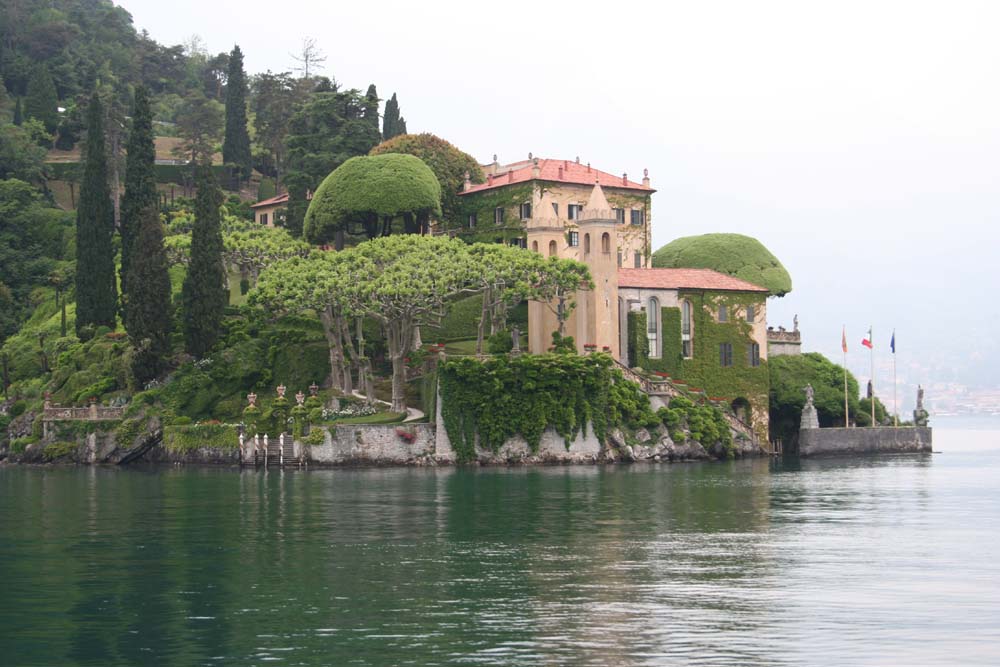
 Via Balbianello, Lake Como
The lure of the sapphire blue water, seductive picture perfect landscapes and the heady scent of jasmine and honeysuckle tend to conjure up thoughts of love and romance, not fish and risotto. But in a 13th century stone tower in the medieval heart of the town of Como a small revolution is taking place, a culinary revolution led by Chef Stefano Visini. It is no accident that he chose such an old building for his restaurant for the 40 year old Como native is a traditionalist - of sorts.

 Chef Stefano Visini
The morning I went to Como to interview Chef Visini the sun was so bright sparks of light were jumping off the surface of the water. And as large white ferryboats transported locals and tourists up and down the Y shaped lake, Visini and his staff were busy in the restaurant’s tower kitchen prepping food for the mid-day crowd. The Chef was preparing swordfish, sturgeon and salmon that would appear on the lunch menu as a trio of smoked fish with a sauce of raspberry purée and fresh ginger. His assistant was busy shelling fresh fava beans and toasting pancetta that would be used later, along with pecorino cheese di fossa, in a fresh pasta dish.


“I use the classics as a starting point much the same way architects use basic construction principles,” he says, “but then my creativity kicks in and I’m off and running, or off and cooking actually. I totally enjoy what I do, and what I enjoy most is coming up with new and unexpected tastes for my clientele.”

It was at a private celebration at the legendary Villa Balbianello that Chef Visini had the opportunity to flex his creative culinary muscles. Often cited as the most magical residence in all of Italy, the villa was featured in the classic film ‘A Month by the Lake’ starring Uma Thurman and Vanessa Redgrave. Built at the end of the 16th century by an important Renaissance Cardinal, the loggias, terraces and buildings that cascade down the slopes of a lush, dark green promontory to the lake provided the perfect setting for the Chef to create his culinary magic.
 Lake Entrance to Villa Balbianello, Lake Como

“It was every chef’s dream,” says Visini, “a private party for 150 guests set in one of the most beautiful places in the world with the added bonus of an unlimited budget.”

The guests were ferried from Como on a private yacht, and as they climbed the torch lit stone stairway to the villa’s terrace, which is slightly larger than a tennis court, they were handed flutes of ice cold Champagne ‘Pol Roger Brut Reserve. Waiters dressed as sea captains then offered a selection of appetizers. Marinated salmon with spicy caramelized pineapple; a salad of shrimp, asparagus and tiny new fava beans; and a tomato gelee’ with mussels and spring onion are only three of the eight appetizers that were served, each on their own individual sterling silver spoon.

Handsome Waiters

When the guests were called to table, the multi-course menu started with an antipasto of sea bass filets flavored with Martini Dry, served on a bed of braised red onions and accompanied by river shrimp and a sauce of raspberries and fresh ginger. The two primi piatti were shrimp and lobster ravioli in a lobster sauce, followed by a creamy fish risotto served with tiny candied tomatoes and a puree of fresh peas. The secondo, or main course, was a rosette of veal wrapped in paper-thin slices of Lardo di Colonnata, served with Chanterelle mushrooms, and fresh asparagus spears drizzled with a delicate Madeira sauce.
Tomato Gelee' Appetizer
As the golden moon moved across the star lit summer sky, waiters began serving the caravan of deserts, one more sumptuous than the other. A dense chocolate cream with orange sauce came first, followed by an eggcup of wild strawberries marinated in 80-year-old balsamic vinegar, served with a vanilla and bourbon sauce and a miniature aspic of linden honey. Next came a mousse of fresh mangos, served on a bed of tropical fruits and garnished with fresh coconut curls. Crème caramel topped flaky little butter cookies, and that was followed by seven more delights plus an assortment of delicate miniature pastries.
 Ristorante Visini

"I used several classic Italian recipes in the Villa Balbianello menu,” says Visini, “for example, strawberries marinated in aged balsamic vinegar have been part of our cuisine since the dish was first served to Italian princes during the Renaissance. I added the bourbon, vanilla sauce and honey aspic just to give the dish an extra kick. And the candied cherry tomatoes are my version of a centuries old Sicilian tradition of serving the tiny tomatoes with honey.”

 Pastries from Ristorante Visini

As impressive as the menu was, I was even more impressed that all the food for the party was prepared in the restaurant’s tiny kitchen and transported to the villa by boat. But Visini assures me that it is normal operating procedure, and that he is used to working in tight spaces. “However, it can get a little tricky sometimes,” he admitted as he looked around his shiny second floor kitchen.
 Interior of Ristorante Visini
An amazing amount of food is produced in that small kitchen. Not only does it serve as the main kitchen for Ristorante Visini, but it is also the headquarters of Visini's catering operation and the heart of the rosticceria, which sells food to take out, and the pasticceria or pastryshop. Corrado Visini, the chef's brother, is the wine steward and keeps the operation stocked with a large assortment of really good wine.
 Chef Visini


Later that afternoon the Chef and I sat at an outdoor table in front of the restaurant and talked about food.

“Travelers don’t really think about food when they are in Como,” he said, “they come here and eat pretty ordinary stuff. The draw is the beauty of the lake and the charm of the town. But I want to change that. I want people to go home with more than just wonderful visual memories of their visit; I want them to have wonderful taste memories as well. And years from now, when they are reminiscing about the great time they had in Como, I want them to say, “. . . . . and remember that meal we had at the Ristorante Visini, now that was really something special.

 
Ristorante Visini
Antica Torre dei Mercanti
Via Ballerini 9 (Around the corner from Coin dept. store)
22110 Como  Tel. +39 031 242 760
Email:
info@visini.it http://www.visini.it/


22 April 2010

AUNTIE PASTA: Porta Palazzo Market

TURIN, Italy – With the sky still an early morning pink, crates of dark purple eggplant, yellow pears and fragrant fennel are stacked willy nilly, cluttering the streets as fruit and vegetable vendors at Turin’s great food market, Porta Palazzo set up their market stalls for the day. Brawny butchers in white coats and blood stained aprons pull large beef hindquarters and pork carcasses from rumbling refrigerated trucks and carry them to their market stalls in the immense glass and wrought iron building nearby.

But even before the butchers start to sharpen their knives and price cards are stuck into the produce boxes, local chefs are on the prowl, menu ideas running through their minds. How many crates of Swiss chard do you have? Never mind, how about the beets, will you have more tomorrow? The day’s menu depends on what they choose. The only thing certain is that the food they’ll prepare is unlike any you have ever eaten in Italy.

Chef Roberto Donna of Washington, D.C. knows first-hand how creative the chefs in his hometown can be. He’ll tell you that with such incredibly voluptuous and seductive ingredients as white truffles, porcini mushrooms, Piedmont beef, fresh brook trout, and an abundance of game, and locals are ever really surprised when first time visitors can barely keep from swooning at the dinner table.

Turinese cuisine is unlike the food in any other part of Italy. Local dishes incorporate a much larger variety of savory sauces which are more traditional in French cuisine than in Italian. And chefs tend to reach for butter and lard rather than olive oil, which is also more French than Italian. Olive oil has only been used in local cooking since the 1950’s when it was brought north by southern Italians who immigrated to Turin to work in the automobile industry.

Another difference is that appetizers play a much larger role here than in other parts of Italy, both in the size of the portions and in their sheer creativity. In Chef Donna’s definitive cookbook, ‘Cooking in Piedmont’, he offers twenty-six recipes for appetizers including such non-appetizer sounding dishes as rabbit salad, stuffed roasted peppers, veal tongue in a spicy red sauce, a duck liver flan and spicy polenta served with fried quail eggs.

Probably the best known Piedmontese appetizers are bagna caoda –literally a hot bath -of oil, garlic, anchovies and butter served as a dipping sauce for winter vegetables, and fonduta (from the French fondre, to melt) a fondue of creamy Fontina cheese flavored with white truffles. Truffles are used extensively in Turinese cooking, and when they are in season – between November and February – they are generously showered over just about everything.

Two of Turin’s most popular pasta dishes are tajarin, golden egg noodles served with melted butter and a shaving of white truffles, and Chef Donna’s favorite, ravioli del plin, (del plin means to pinch in Turinese dialect) which are often served with a reduced veal stock and a delicate veil of grated parmesan cheese. It is interesting that the Turinese prefer fresh egg pastas, rather than pastasciutta, dried pasta, that is so popular throughout the rest of Italy.

The best rice in Italy, some say the world, grows in the wide flat lands between Milan and Turin so in addition to pasta you may find a rich and creamy risotto, rice served with meat sauce, and/or a rice and chick pea dish on the menu. Other non-pasta choices are chestnut flour gnocchi served with a cheese sauce called fonduta di Castelmagno (Castelmagno is a town southwest of Turin famous for its cheese), and baccalà (salted cod), served with saffron flavored polenta. And then, as the Italians say, Coraggio! – Courage! It’s time to move on to the main course.

The city’s signature dish is bollito misto, a mix of boiled meats served with three sauces: bagnet verd, or green sauce made from parsely, anchovies, garlic and olive oil; bagnet ross, a red sauce of crushed tomatoes, garlic and hot peppers, and saussa d’avije, a yellow mustard sauce sweetened with honey and crushed nuts.

In the past, traditionalists insisted that bollito misto contain seven vegetables, seven types of meat, and seven types of ornamenti, i.e. tongues, tails and dangly bits, but today the more exotic dangly bits are slowly being eased out. You'll find bollito misto on the menu at least once a week in most Turin restaurants. The boiled meats are served from a rolling stainless steel cart and each type of meat is kept warm in its own broth filled compartment. If you are squeamish about eating dangly bits you can ask for only the meats that you want.

Other classic Piedmontese dishes include brasato al Barolo, Piedmont beef slowly braised in Barolo wine, and finanziera, a stew of cock’s crests, chicken livers, veal, peas and porcini mushrooms. In the fall and winter you’ll find venison, roe deer (a small European deer), quail and even tagliata di renna, slices of reindeer meat, on some menus along with beef and veal, free range poultry and freshly caught fish instead of fish farm fish.

In a country where no culinary rock has been left unturned, isn't it nice to know that there is still a small corner where you can find new taste experiences? The food of Turin may just change the way you look at Italian food forever.

Photos: (1) food truck at Porta Palazzo; (2) Chef Roberto Donna; (3-6) exterior and interior views of the Porta Palzazzo market

For more information about Chef Donna visit his web site: http://www.robertodonna.com/robertodonna/bio.php

16 April 2010

AUNTIE PASTA; Sweet Artichoke Dreams

SARONNO, Italy - Four out of the five fruttivendolos I passed walking around Saronno this morning had baskets of artichokes sitting out in front of their shops. It's the end of the season so the prices were good, but even so it didn't look like many people were buying them.

It stunned me to learn that there are about 90 different varieties of artichokes that grow in Italy. Some are smooth and fat, others are thin and have sharp thorns.The smooth ones grow primarily in Lazio and Puglia and are the type I used to eat when I was a kid. The prickly ones grow in Liguria, Sicily and Sardinia and the first time I saw them was when I lived in Genoa.

One Ligurian variety that has won the approval of the Slow Food movement comes from Perinaldo, a small hill town in the province of Imperia, near the border with France. The town is so small there are only 400 families who live there and out of those there are seven artichoke producers.

On the second Sunday in May Perinaldo hosts a food fair featuring their famous artichokes and the other local products, Taggiasca olives and olive oil.

I’m not an artichoke connoisseur, all I know is that the prickly and non-prickly artichokes are prepared in different ways. The fat, smooth ones, called Mammole, are often deep fried, as in Carciofi alla Giudea, or stuffed, like my Grandmother used to make them. The prickly ones, which are very tender, are often sliced very thin and eaten raw.

I remember the first time I cooked artichokes. I was using a recipe from my memory bank, based more on taste than technique. What I remembered was that my Grandmother cooked artichokes in the oven. She would cut the bottoms so the artichoke would stand up straight in a low baking dish. Then she would slice up a clove of garlic and slip the strips down in between the artichoke leaves. Next she would sprinkle the artichoke with the dried mintuccia her sister Mary had sent her from Italy, drizzle them with olive oil, add a little salt and pepper and into the oven they would go.

How long they cooked was anyone’s guess. I was only 5 years old so my little kid concept of time and actual time were not exactly in sync yet. But oh how I loved those artichokes. I remember peeling the leaves off one by one, oil all over my hands, my face, bits mintuccia stuck in my teeth, and my eyes rolling back in my head at the delicious flavor.

Fast forward to the part of my life when I was married with children and living in Philadelphia. One week I found artichokes at the Italian market and decided to cook them. I knew I was missing a key ingredient, the mintuccia, but I thought I would give them a go anyway. I brought them home, cleaned them up as much as you can clean up artichokes, sliced the bottoms, put them in a baking dish, stuck in the garlic slivers, drizzled them with olive oil, salt, pepper and closed the oven door. Then every half hour or so, I would wander back into the kitchen and peek into the oven to see if they were cooked yet.

An hour passed, then two. I fed the kids, gave them a bath and checked the artichokes. Nope. Not ready. Read the kids a story and put them to bed and checked the artichokes again. Nope Not ready yet. Nor were they going to be ready - ever. I finally went to bed at 11 PM, the artichokes brown and shriveled and as hard as a rock.

I don’t know when or how I finally discovered the crucial step I had missed in the care and cooking of artichokes. As it turns out you have to boil or steam before you put them in the oven. So now I know. Wednesday is market day in Saronno and I will go and buy artichokes. I will boil them and bake them and love every minute I spend eating them, even with oil on my hands and mintuccia in my teeth, and it will all be worth it.

If you would like a less messy way of eating artichokes you can prepare them like the Perinaldesi do. Their traditional recipes are relatively simple. They either cook them in the oven with Parmesan cheese and mushrooms, or fry them with a little garlic and parsley.

Or you can try this recipe from Chef Roberto Donna, adapted by StarChefs.com

Potato, Artichoke and Parmesan Cheese Tort
4 large artichokes, cleaned and thinly sliced at the last minute
4 large potatoes, peeled and thinly sliced
4 ounces Parmesan cheese, thinly sliced
4 ounces melted butter
1 medium onion, sliced, cooked and caramelized
2 fresh thyme sprigs, chopped
Salt and freshly ground black pepper to taste

To prepare the tort:
Preheat the oven at 350°F. Take a 6-inch non-stick pan, grease the bottom and sides.

Alternate layers of potato, artichokes and Pecorino cheese; sprinkle each layer with onions, thyme, butter, salt and pepper, until you fill the pan entirely (go over the top if you want, it will shrink).

Place in the oven, cover with foil and cook for 1 hour. Let it sit for 10 minutes. Unmold from the non-stick pan and serve warm.
Buon Appetito.

11 March 2010

AUNTIE PASTA - Bruciolo

SARONNO, Italy - The balcony off of my kitchen serves double duty as my herb garden and storage area. The herb garden is made up of two rather large rosemary plants, two pots of marjoram, one of sage, one oregano, another of thyme and one large pot of a wild Roman mint called mintuccia that is used to flavor artichokes.

The mintuccia plant came from a nursery in Tuscany. It is one of the things that keeps me connected to my Italian roots. My Grandmother used to get bundles of it from her sister Mary in Italy, but of course that was back in the day when you could send stuff like that through the mail. Even now, just the smell of it takes me back to when I was five years old leaning with both elbows on the kitchen table watching my Grandmother cook.

That side of the apartment gets the sun in the morning, so it’s a great place for my herbs. I love being able to go out there and get what I need when I need it. The thyme plant may have to be replaced this year, but for the others, they manage to survive year after year, always giving me enough herbs to cook with even through the winter. I use a lot of rosemary. I use it with all kinds of meats and sauces and to make bruciolo. I don’t know the English translation for bruciolo, but what it is, besides an ingenious idea, is a sprig of rosemary stuck into a clove of garlic.

I learned about bruciolo from an Italian chef, Roberto Donna. Chef Donna, originally from the Piedmont region of Italy, now lives in Washington, D.C. where he owns a number of exclusive restaurants including Galileo on 21st Street. He has won a ton of culinary awards, including the coveted Restaurateur of the Year, The Chefs of America Award, One of the Ten Best Chefs in America and the Fine Dining Hall of Fame.

Here’s what he says about bruciolo in his cookbook ‘Cooking in Piedmont’. “I like to use bruciolo…. because it gives a good, fresh aroma of garlic and rosemary to the food without overpowering the dish.”

He recommends using a spring of fresh rosemary, no more than 5 inches long and blanching it in boiling water for 30 seconds. Blanching the rosemary keeps the leaves from falling off during cooking. Be sure to insert the rosemary into the garlic at the heart of the clove.

When you are cooking, place the bruciolo in the olive oil or butter when the fat is still cool. That way the garlic and rosemary will release their full aroma without searing or burning. 
When the garlic is golden brown in color, you can remove it from the pan or leave it in. By cooking the garlic and rosemary side by side you get the best of both flavors, and you will be surprised by the flavor it leaves in the dish, good, sweet and not too strong. 

Next Week: How to make flavored oils