Showing posts with label Italian flavors. Show all posts

08 July 2010

AUNTIE PASTA: Lunch with George

SARONNO, Italy –There is a delicious stillness that settles on Saronno in the summer. Life is easy. People move a little slower, you see fewer cars on the streets and a lot more bicycles. In the cool of the evening couples go out for a walk, and stop for an ice cream. There is always lines at the gelelaterias and at the outdoor movies, where you can sit under the stars, eat your ice cream and catch any breeze that happens to pass your way.

What Saronno isn't in the summer is a place that encourages long sojourns in the kitchen. But to paraphrase my Grandmother, heat or no heat, you still have to eat. So before my friend George disappears on vacation, I invited him over for lunch. And he’s coming. Tomorrow.

Tortino Tatin

Because it is so hot I decided to put together a menu that doesn't require any last minute cooking. Instead of the usual first course of pasta, I thought I would make a Tortino Tatin of summer vegetables. Basically a it’s a pie crust filled with slices of tomato, zucchini and eggplant on a pie crust. Sometimes I put strips of mild cheese on top of the vegetables and pop it under the broiler until the cheese melts, but it’s too hot to even think about doing that.

The main course will be grilled chicken which I can do on top of the stove first thing in the morning and serve at room temperature with wedges of lemon. I’ll cut a whole chicken down the back and open it up so it lays flat on the grill. It won’t require any type of oil so it’s not only quick and easy, it’s low-cal too. To boost the flavor a little I’ll cut some fresh rosemary and slide it up under the skin on the chicken breast. That’s all it should need.

Rice Salad

To go with the chicken I’m leaning toward rice salad because I can cook the rice this morning and put the salad together later today or even tomorrow. Then all I have to do is chop the celery, cucumbers and tomatoes, defrost a handful of frozen peas, if I have any boiled ham left over from today’s lunch I’ll add some of that along with a few capers, a teaspoon of green peppercorns, some dried marjoram and a little fennel seed.

To make the Tortino you’ll need an eggplant, a large, ripe tomato and a medium size zucchini. Wash and cut the eggplant into slices, put it in a colander and sprinkle it with kosher salt. Let it sit for about an hour so the eggplant loses some of its moisture. Then rinse the eggplant slices under running water and dry them.

Heat about one tablespoon of olive oil in a frying pan and lightly cook the eggplant slices and sliced zucchini. Line a pie plate with pie crust dough and layer the eggplant and zucchini slices, alternating with the slices of tomato. Sprinkle with fresh thyme. Bake in a moderate oven (350°F) for about 25 minutes. You can serve it immediately or let it cool and serve it at room temperature, which is what I am going to do. I’ll put the slices of mozzarella on it just before I serve it.

Frosty pitchers of ice cold lemonade
Desert will be a simple lemon sorbetto and maybe slices of watermelon. Lemon sorbetto is easy to make but buying it in the grocery store is even easier – and just as good. If the watermelon turns out to be too much to carry, I’ll pick up some nut cookies at the Lazaroni store across the street. They are very good and will be perfect with the lemon sorbetto.

And a frosty pitcher of lemonade should be just the right thing to go along with this summery lunch, don't you think?

27 May 2010

AUNTIE PASTA: IS DIS ARONNO?

SARONNO, Italy - Ask anyone south of Milan or north of Como where Saronno is, you’ll probably be greeted with a blank stare. Ask if they have ever eaten Amaretti DiSaronno, or spiked their coffee with Amaretto di Saronno, and everything changes.


While the word amaretto (singular) and amaretti (plural) are the diminutive of “amaro” or bitter, and mean “a little bitter”, both Amaretto DiSaronno and Amaretti diSaronno are sweet.

Amaretto DiSaronno is an almond flavored liqueur which was first made in 1525. There is a lovely little story behind the origin of this special liqueur, the story of a romance between a painter, Bernardino Luini, a student of Leonardo daVinci, who was hired to paint a series of frescos in Saronno’s most famous monument, the Sanctuary of the Blessed Virgin of the Miracles, and a local girl he hired as his model.

The story is that out of gratitude and affection she wanted to give him a gift and created a liqueur by steeping apricot kernels in brandy. The Amaretto DiSaronno sold today is made from the original recipe and imported by Bacardi. The only difference is it is now sold in a glass bottle made by a Venetian craftsman from the island of Murano.

I confess I am not a big Amaretto fan but it is good if you are making Tiramisu and on ice cream. And on one of the web sites I saw a suggestion to add it to pancake batter. Might be worth a try. Here are a few Amaretto drink recipes you might want to try:

THE FRENCH CONNECTION
1 part Amaretto liqueur
1 part Cognac
Pour ingredients over ice into an old fashioned glass and stir gently.

THE GODFATHER
1 part Amaretto liqueur
1 part Scotch
Pour ingredients over ice into an old fashioned glass and stir gently.

THE GODMOTHER
1 part Amaretto liqueur
1 part Vodka
Pour ingredients over ice into an old fashioned glass and stir gently.

AMARETTO SOUR
2 oz Amaretto
1 oz fresh lemon juice
½ oz Simple Syrup
Pour all ingredients into a cocktail shaker. Add ice, shake vigorously, and strain into a sour glass.

Amaretti di Saronno cookies are a lot younger than Amaretto di Saronno, by about 200 years. They were first made commercially in the 1700’s by the Lazzaroni family of Saronno, but they too have a story.

It seems the Cardinal of Milan was scheduled to visit Saronno. As it was a very special occasion for the town, two young lovers decided to make a special cookie in his honor. They baked up a light biscotti confection from sugar, egg whites and apricot kernels. The apricot kernels gave the cookies a slightly bitter taste, which earned them the name “amaretti”. The cookies that the Lazzaroni family make today are made from the same three ingredients and still have the beautiful crunchy-chewy texture the original cookies had. They are the only cookies that can be called diSaronno.

Lazzaroni recently opened a couple of retail shops in Saronno, one of them is on the other side of the piazza in front of my apartment building. I like the shop because it carries their full line of cookies, which are very good.
They also carry local artiginale food products I never see in the regular grocery stores. One product I buy is a dense cake similar to an American fruit cake, but with bigger chunks of fruit. It’s not overly sweet and tastes great with that first cup of coffee in the morning.

20 May 2010

AUNTIE PASTA: Chi Chi Cicheti

VENICE, Italy - One of the Venice’s best-kept secret are the homey little wine bars called bacari. For the most part, the rustic bars are hidden away in the warren of calli and alleys that run from posh Saint Marks’s square to the working class neighborhoods of Santa Croce and Castello. You can buy wine by the glass and snack on cicheti, the Venetian version of Spanish tapas or Chinese dim sum, and the Venetians have been doing just that since the days Venice ruled the seas. They are the culinary oases the locals head for when they get hungry.


Streets of Venice

Cicheti vary from bar to bar, and from season to season, and you buy them by the piece or portion. Tasty offerings may include tender braised baby octopus, fresh sardines, cleaned and stuffed with a savory filling, silvery anchovies that have been marinated in lemon juice, all culled that morning from just beyond the Venetian lagoon. In the spring and early summer, delicate zucchini flowers, still attached to miniature green zucchini, are transported across the bay from the vegetable farms on the island of San Erasmos. The zucchini, and their flowers are dipped in an air light batter and flash fried in hot oil. As the languid days of summer pass and the weather cools, white cannelloni beans, marinated with onions and olive oil, and lemony artichoke hearts may make an appearance. Spicy slices of tongue, savory strips of tripe, little meatballs, bits of cooked salami, purchased from the Rialto market vendors, may make it to the bacari counter as well.

Hungry Gondoliers

Cicheti are served at room temperature and each bacari owner prides himself on having at least one cicheto that he does better than anyone else. Al Portego is known for tuna cakes, Alla Vedova for peppery meatballs, and at Da Pino there are two seafood specialties; boiled cuttlefish eggs drizzled with olive oil and parsley, and whipped cod made creamy by the addition of olive oil and milk.

Cozy bacari

Most bacari are small and cozy. The tables are ricety, the marble floors old and worn, and over your heard you'll probably see battered wood beams that run across the ceiling. Locals stand at the bar, order a cichetto or two and an ombretta, a small glass of local wine, or a bicherino, a small glass of beer. After catching up on the latest gossip, they move on to another bacaro and start all over again. The custom of going from one bacaro to another is called un giro di ombre, and it is a long-standing Venetian pastime.

Salute!

Some bacari offer more substantial fare making them a favorite with the working crowd. The young gondoliers sitting next to me at Osteria al Diavolo l’Aquasanta, ordered the house specialty, a portion of boneless boiled calf’s head, which they devoured with gusto before heading back to another afternoon of transporting starry-eyed tourists through the watery Venetian streets.

Mmm, mmm good.

Venetian sailors may have picked up the cicheti habit while opening trade routes in the Middle East where the ritual of serving guests many dishes with each person eating a little from each, is part of an ancient Muslim custom of showing hospitality to strangers. Sinister minded historians suggest the custom was introduced in the courts of Constantinople (Istanbul) to prevent Ottoman potentates from being poisoned; others think it was simply a convenient way of sharing what the host had to offer. Either way, this centuries old tradition continues still in Venice.

Happy Barcari owner

Most bacari open around 9 AM and close around 8:30 PM or later if they also serve meals. It is a savory, satisfying and convivial way to enjoy lunch, especially for the gastronomically curious.

Expect to pay about one euro ($1.20) for most cichetti selections. An ombretto of local wine or a bicherino of beer, cost about the same. Most bacari close around 8:30, unless they serve meals. Look for signs that say Cicheti Venexiani, that means it’s the real deal.

13 May 2010

AUNTIE PASTA: Color Me Green

SARONNO, Italy - Agretti, also called barba di frate, is a spring vegetable I didn't know existed until I moved to Saronno. They are slightly odd looking, a little like dark green sea grass with pink roots. Agretti never struck me as being particularly appetizing but after passing them up for the past couple of years, my curiosity got the best of me. After all they are green, I’m in Italy, and one of the things the Italians do best is cook green things.

Asparagus, peas, fava and agretti - It's Springtime in Italy
My first idea was to just put them in a frying pan and sauté them with a little olive oil and garlic, the classic Italian treatment. But then I remembered my dreadful experience with the artichokes that never cooked, and decided it might be a good idea to boil the agretti first. After I cut off the roots, I cleaned them and put them in a pot with a little water and brought them to a boil. I wasn’t sure how long it was going to take so I just kept testing them until they felt “cooked”.

Then I drained them and put them in a sauté pan with a little rosemary oil, a couple of medium size cloves of garlic, and for good measure I threw in a small chili pepper. A little salt, a grind or two of pepper and then - the moment of truth. I don't know what I expected but they were sweet, tender, flavorful and delicious. It was such a relief after my disastrous experience with zuccotto last week.
Trolling the internet for more information and other recipes using agretti I learned that they grow throughout the Mediterranean and in North Africa. They used to be grown in northern Italy, up near Venice, but now the bulk of the crop is produced in Spain, where they are called barrilla, and Sicily. Like a lot of Italian food they are sold under different names in different parts of Italy. Even here in Saronno they are sold as barba di frate, barba di cappuccino and agretti, depending on who is selling them. In other part of the country they are called barba del negus, bacicci, soda, ruscano, riscolo, lischi, finocchi di mare and they are also sold by the name of the town or area where they grow. 

Agretti Quiche

It was surprising how many recipes I found for this vegetable. Apparently it is a popular dish in England too, but there they cook the greens in butter rather than olive oil and most of the recipes called for the addition of chopped onion. I wanted to try the English version too, so for dinner I made a frittata with the agretti I had left over from lunch. What I found was that the butter changed the delicate flavor of the greens and actually overpowered them, which in my experience is totally against every written and unwritten rule of Italian cooking.
 
Agretti with Ravioli
 
In all fairness to the Brits, even some of the Italian recipes seemed a bit heavy handed. One of the Italian recipes called for sautéing them like I did in olive oil and garlic, but with an anchovy and no chili pepper. Another recipe for agretti with trenette added cubes of boiled ham and a scallion to the sautéed greens, and another suggested chopped pancetta instead of boiled ham. There were also recipes for agretti with tofu, agretti with meatballs, agretti quiche, agretti with ricotta, with goat’s cheese, with octopus and with sea urchins. I’m sure all the recipes are good, but I think I'll just stick to simple agretti with olive oil and garlic, at least for now. 
Agretti in the Market
 
I don't know if this vegetable is sold outside of Europe, but if you ever see it in your local market pick it up and give it a try. If you like greens, I'm sure you’ll like it. Buon Appetito!

29 April 2010

AUNTIE PASTA: La Cucina Deliziosa

COMO, Italy - Lake Como is not the place people usually travel to for the food.

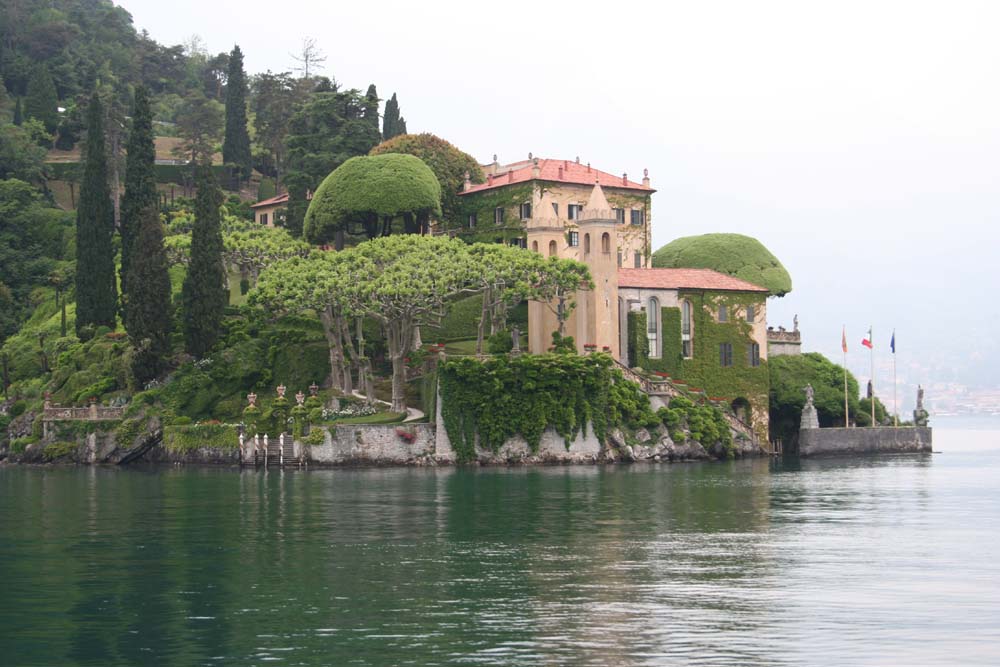
 Via Balbianello, Lake Como
The lure of the sapphire blue water, seductive picture perfect landscapes and the heady scent of jasmine and honeysuckle tend to conjure up thoughts of love and romance, not fish and risotto. But in a 13th century stone tower in the medieval heart of the town of Como a small revolution is taking place, a culinary revolution led by Chef Stefano Visini. It is no accident that he chose such an old building for his restaurant for the 40 year old Como native is a traditionalist - of sorts.

 Chef Stefano Visini
The morning I went to Como to interview Chef Visini the sun was so bright sparks of light were jumping off the surface of the water. And as large white ferryboats transported locals and tourists up and down the Y shaped lake, Visini and his staff were busy in the restaurant’s tower kitchen prepping food for the mid-day crowd. The Chef was preparing swordfish, sturgeon and salmon that would appear on the lunch menu as a trio of smoked fish with a sauce of raspberry purée and fresh ginger. His assistant was busy shelling fresh fava beans and toasting pancetta that would be used later, along with pecorino cheese di fossa, in a fresh pasta dish.


“I use the classics as a starting point much the same way architects use basic construction principles,” he says, “but then my creativity kicks in and I’m off and running, or off and cooking actually. I totally enjoy what I do, and what I enjoy most is coming up with new and unexpected tastes for my clientele.”

It was at a private celebration at the legendary Villa Balbianello that Chef Visini had the opportunity to flex his creative culinary muscles. Often cited as the most magical residence in all of Italy, the villa was featured in the classic film ‘A Month by the Lake’ starring Uma Thurman and Vanessa Redgrave. Built at the end of the 16th century by an important Renaissance Cardinal, the loggias, terraces and buildings that cascade down the slopes of a lush, dark green promontory to the lake provided the perfect setting for the Chef to create his culinary magic.
 Lake Entrance to Villa Balbianello, Lake Como

“It was every chef’s dream,” says Visini, “a private party for 150 guests set in one of the most beautiful places in the world with the added bonus of an unlimited budget.”

The guests were ferried from Como on a private yacht, and as they climbed the torch lit stone stairway to the villa’s terrace, which is slightly larger than a tennis court, they were handed flutes of ice cold Champagne ‘Pol Roger Brut Reserve. Waiters dressed as sea captains then offered a selection of appetizers. Marinated salmon with spicy caramelized pineapple; a salad of shrimp, asparagus and tiny new fava beans; and a tomato gelee’ with mussels and spring onion are only three of the eight appetizers that were served, each on their own individual sterling silver spoon.

Handsome Waiters

When the guests were called to table, the multi-course menu started with an antipasto of sea bass filets flavored with Martini Dry, served on a bed of braised red onions and accompanied by river shrimp and a sauce of raspberries and fresh ginger. The two primi piatti were shrimp and lobster ravioli in a lobster sauce, followed by a creamy fish risotto served with tiny candied tomatoes and a puree of fresh peas. The secondo, or main course, was a rosette of veal wrapped in paper-thin slices of Lardo di Colonnata, served with Chanterelle mushrooms, and fresh asparagus spears drizzled with a delicate Madeira sauce.
Tomato Gelee' Appetizer
As the golden moon moved across the star lit summer sky, waiters began serving the caravan of deserts, one more sumptuous than the other. A dense chocolate cream with orange sauce came first, followed by an eggcup of wild strawberries marinated in 80-year-old balsamic vinegar, served with a vanilla and bourbon sauce and a miniature aspic of linden honey. Next came a mousse of fresh mangos, served on a bed of tropical fruits and garnished with fresh coconut curls. Crème caramel topped flaky little butter cookies, and that was followed by seven more delights plus an assortment of delicate miniature pastries.
 Ristorante Visini

"I used several classic Italian recipes in the Villa Balbianello menu,” says Visini, “for example, strawberries marinated in aged balsamic vinegar have been part of our cuisine since the dish was first served to Italian princes during the Renaissance. I added the bourbon, vanilla sauce and honey aspic just to give the dish an extra kick. And the candied cherry tomatoes are my version of a centuries old Sicilian tradition of serving the tiny tomatoes with honey.”

 Pastries from Ristorante Visini

As impressive as the menu was, I was even more impressed that all the food for the party was prepared in the restaurant’s tiny kitchen and transported to the villa by boat. But Visini assures me that it is normal operating procedure, and that he is used to working in tight spaces. “However, it can get a little tricky sometimes,” he admitted as he looked around his shiny second floor kitchen.
 Interior of Ristorante Visini
An amazing amount of food is produced in that small kitchen. Not only does it serve as the main kitchen for Ristorante Visini, but it is also the headquarters of Visini's catering operation and the heart of the rosticceria, which sells food to take out, and the pasticceria or pastryshop. Corrado Visini, the chef's brother, is the wine steward and keeps the operation stocked with a large assortment of really good wine.
 Chef Visini


Later that afternoon the Chef and I sat at an outdoor table in front of the restaurant and talked about food.

“Travelers don’t really think about food when they are in Como,” he said, “they come here and eat pretty ordinary stuff. The draw is the beauty of the lake and the charm of the town. But I want to change that. I want people to go home with more than just wonderful visual memories of their visit; I want them to have wonderful taste memories as well. And years from now, when they are reminiscing about the great time they had in Como, I want them to say, “. . . . . and remember that meal we had at the Ristorante Visini, now that was really something special.

 
Ristorante Visini
Antica Torre dei Mercanti
Via Ballerini 9 (Around the corner from Coin dept. store)
22110 Como  Tel. +39 031 242 760
Email:
info@visini.it http://www.visini.it/


22 April 2010

AUNTIE PASTA: Porta Palazzo Market

TURIN, Italy – With the sky still an early morning pink, crates of dark purple eggplant, yellow pears and fragrant fennel are stacked willy nilly, cluttering the streets as fruit and vegetable vendors at Turin’s great food market, Porta Palazzo set up their market stalls for the day. Brawny butchers in white coats and blood stained aprons pull large beef hindquarters and pork carcasses from rumbling refrigerated trucks and carry them to their market stalls in the immense glass and wrought iron building nearby.

But even before the butchers start to sharpen their knives and price cards are stuck into the produce boxes, local chefs are on the prowl, menu ideas running through their minds. How many crates of Swiss chard do you have? Never mind, how about the beets, will you have more tomorrow? The day’s menu depends on what they choose. The only thing certain is that the food they’ll prepare is unlike any you have ever eaten in Italy.

Chef Roberto Donna of Washington, D.C. knows first-hand how creative the chefs in his hometown can be. He’ll tell you that with such incredibly voluptuous and seductive ingredients as white truffles, porcini mushrooms, Piedmont beef, fresh brook trout, and an abundance of game, and locals are ever really surprised when first time visitors can barely keep from swooning at the dinner table.

Turinese cuisine is unlike the food in any other part of Italy. Local dishes incorporate a much larger variety of savory sauces which are more traditional in French cuisine than in Italian. And chefs tend to reach for butter and lard rather than olive oil, which is also more French than Italian. Olive oil has only been used in local cooking since the 1950’s when it was brought north by southern Italians who immigrated to Turin to work in the automobile industry.

Another difference is that appetizers play a much larger role here than in other parts of Italy, both in the size of the portions and in their sheer creativity. In Chef Donna’s definitive cookbook, ‘Cooking in Piedmont’, he offers twenty-six recipes for appetizers including such non-appetizer sounding dishes as rabbit salad, stuffed roasted peppers, veal tongue in a spicy red sauce, a duck liver flan and spicy polenta served with fried quail eggs.

Probably the best known Piedmontese appetizers are bagna caoda –literally a hot bath -of oil, garlic, anchovies and butter served as a dipping sauce for winter vegetables, and fonduta (from the French fondre, to melt) a fondue of creamy Fontina cheese flavored with white truffles. Truffles are used extensively in Turinese cooking, and when they are in season – between November and February – they are generously showered over just about everything.

Two of Turin’s most popular pasta dishes are tajarin, golden egg noodles served with melted butter and a shaving of white truffles, and Chef Donna’s favorite, ravioli del plin, (del plin means to pinch in Turinese dialect) which are often served with a reduced veal stock and a delicate veil of grated parmesan cheese. It is interesting that the Turinese prefer fresh egg pastas, rather than pastasciutta, dried pasta, that is so popular throughout the rest of Italy.

The best rice in Italy, some say the world, grows in the wide flat lands between Milan and Turin so in addition to pasta you may find a rich and creamy risotto, rice served with meat sauce, and/or a rice and chick pea dish on the menu. Other non-pasta choices are chestnut flour gnocchi served with a cheese sauce called fonduta di Castelmagno (Castelmagno is a town southwest of Turin famous for its cheese), and baccalà (salted cod), served with saffron flavored polenta. And then, as the Italians say, Coraggio! – Courage! It’s time to move on to the main course.

The city’s signature dish is bollito misto, a mix of boiled meats served with three sauces: bagnet verd, or green sauce made from parsely, anchovies, garlic and olive oil; bagnet ross, a red sauce of crushed tomatoes, garlic and hot peppers, and saussa d’avije, a yellow mustard sauce sweetened with honey and crushed nuts.

In the past, traditionalists insisted that bollito misto contain seven vegetables, seven types of meat, and seven types of ornamenti, i.e. tongues, tails and dangly bits, but today the more exotic dangly bits are slowly being eased out. You'll find bollito misto on the menu at least once a week in most Turin restaurants. The boiled meats are served from a rolling stainless steel cart and each type of meat is kept warm in its own broth filled compartment. If you are squeamish about eating dangly bits you can ask for only the meats that you want.

Other classic Piedmontese dishes include brasato al Barolo, Piedmont beef slowly braised in Barolo wine, and finanziera, a stew of cock’s crests, chicken livers, veal, peas and porcini mushrooms. In the fall and winter you’ll find venison, roe deer (a small European deer), quail and even tagliata di renna, slices of reindeer meat, on some menus along with beef and veal, free range poultry and freshly caught fish instead of fish farm fish.

In a country where no culinary rock has been left unturned, isn't it nice to know that there is still a small corner where you can find new taste experiences? The food of Turin may just change the way you look at Italian food forever.

Photos: (1) food truck at Porta Palazzo; (2) Chef Roberto Donna; (3-6) exterior and interior views of the Porta Palzazzo market

For more information about Chef Donna visit his web site: http://www.robertodonna.com/robertodonna/bio.php

16 April 2010

AUNTIE PASTA; Sweet Artichoke Dreams

SARONNO, Italy - Four out of the five fruttivendolos I passed walking around Saronno this morning had baskets of artichokes sitting out in front of their shops. It's the end of the season so the prices were good, but even so it didn't look like many people were buying them.

It stunned me to learn that there are about 90 different varieties of artichokes that grow in Italy. Some are smooth and fat, others are thin and have sharp thorns.The smooth ones grow primarily in Lazio and Puglia and are the type I used to eat when I was a kid. The prickly ones grow in Liguria, Sicily and Sardinia and the first time I saw them was when I lived in Genoa.

One Ligurian variety that has won the approval of the Slow Food movement comes from Perinaldo, a small hill town in the province of Imperia, near the border with France. The town is so small there are only 400 families who live there and out of those there are seven artichoke producers.

On the second Sunday in May Perinaldo hosts a food fair featuring their famous artichokes and the other local products, Taggiasca olives and olive oil.

I’m not an artichoke connoisseur, all I know is that the prickly and non-prickly artichokes are prepared in different ways. The fat, smooth ones, called Mammole, are often deep fried, as in Carciofi alla Giudea, or stuffed, like my Grandmother used to make them. The prickly ones, which are very tender, are often sliced very thin and eaten raw.

I remember the first time I cooked artichokes. I was using a recipe from my memory bank, based more on taste than technique. What I remembered was that my Grandmother cooked artichokes in the oven. She would cut the bottoms so the artichoke would stand up straight in a low baking dish. Then she would slice up a clove of garlic and slip the strips down in between the artichoke leaves. Next she would sprinkle the artichoke with the dried mintuccia her sister Mary had sent her from Italy, drizzle them with olive oil, add a little salt and pepper and into the oven they would go.

How long they cooked was anyone’s guess. I was only 5 years old so my little kid concept of time and actual time were not exactly in sync yet. But oh how I loved those artichokes. I remember peeling the leaves off one by one, oil all over my hands, my face, bits mintuccia stuck in my teeth, and my eyes rolling back in my head at the delicious flavor.

Fast forward to the part of my life when I was married with children and living in Philadelphia. One week I found artichokes at the Italian market and decided to cook them. I knew I was missing a key ingredient, the mintuccia, but I thought I would give them a go anyway. I brought them home, cleaned them up as much as you can clean up artichokes, sliced the bottoms, put them in a baking dish, stuck in the garlic slivers, drizzled them with olive oil, salt, pepper and closed the oven door. Then every half hour or so, I would wander back into the kitchen and peek into the oven to see if they were cooked yet.

An hour passed, then two. I fed the kids, gave them a bath and checked the artichokes. Nope. Not ready. Read the kids a story and put them to bed and checked the artichokes again. Nope Not ready yet. Nor were they going to be ready - ever. I finally went to bed at 11 PM, the artichokes brown and shriveled and as hard as a rock.

I don’t know when or how I finally discovered the crucial step I had missed in the care and cooking of artichokes. As it turns out you have to boil or steam before you put them in the oven. So now I know. Wednesday is market day in Saronno and I will go and buy artichokes. I will boil them and bake them and love every minute I spend eating them, even with oil on my hands and mintuccia in my teeth, and it will all be worth it.

If you would like a less messy way of eating artichokes you can prepare them like the Perinaldesi do. Their traditional recipes are relatively simple. They either cook them in the oven with Parmesan cheese and mushrooms, or fry them with a little garlic and parsley.

Or you can try this recipe from Chef Roberto Donna, adapted by StarChefs.com

Potato, Artichoke and Parmesan Cheese Tort
4 large artichokes, cleaned and thinly sliced at the last minute
4 large potatoes, peeled and thinly sliced
4 ounces Parmesan cheese, thinly sliced
4 ounces melted butter
1 medium onion, sliced, cooked and caramelized
2 fresh thyme sprigs, chopped
Salt and freshly ground black pepper to taste

To prepare the tort:
Preheat the oven at 350°F. Take a 6-inch non-stick pan, grease the bottom and sides.

Alternate layers of potato, artichokes and Pecorino cheese; sprinkle each layer with onions, thyme, butter, salt and pepper, until you fill the pan entirely (go over the top if you want, it will shrink).

Place in the oven, cover with foil and cook for 1 hour. Let it sit for 10 minutes. Unmold from the non-stick pan and serve warm.
Buon Appetito.

08 April 2010

AUNTIE PASTA - Pearfectly Wonderful

SARONNO, Italy - A dear friend of mine is coming to visit next week. It’s her first trip to Italy. It’s always difficult to have first time visitors because there are so many things to see and do here, and I never know where to begin.

Do I take her to Rome, Florence, and Venice, the holy trinity of the tour companies? Do I concentrate on the Lake Region and take her to Fisherman’s Island on Lago Maggiore for lunch? Or how about an afternoon boat ride on Lake Como with an aperitif in Bellagio? A day in Lugano, Switzerland? Or maybe a couple of days on the Italian Riviera? And I can't forget about Milan. There’s so much to see: the Duomo, the Galleria, the Duke’s Castle, the Last Supper, the shopping, oh my.

And when we get back from our outings, be they long or short, what are we going to eat? I’ve been working on a menu for the past few days but it is still very much a work in progress. While my refrigerator is standard size for Italy, it really isn’t very big. And the freezer, well if it weren’t for my coveted stash of Crisco that fills the entire bottom drawer, there would be a little more room in there but….

What I need are recipes I can prepare in advance that actually improve in flavor as they sit. Right this minute two things come to mind: the first is a Spring minestrone. By the time she gets here the primizia, or first little vegetables of the season, should be on the market. Baby zucchini, tiny green beans and baby carrots are all good candidates for a Spring minestrone.

And to make my minestrone even more Spring like, I’ll probably top it with a small dollop of pesto just before I serve it. It’s a Genovese thing. An Italian thing is to serve minestrone at room temperature – tepid, not cold – when the weather is warm. In fact you have probably seen bowls of minestrone sitting out on buffet tables in trattorie when you visited Italy, especially in Tuscany.

As for desert, I just may make poached pears before pears disappear for the seaon.


During the winter months I like to serve pears poached in red wine, a good full bodied red wine from Piedmont is usally my first choice.

The pears turn a deep reddish purple color, are beautiful to see, delicious to eat and perfect for a dinner party because I can make them ahead of time. I like to serve them with vanilla gelato or thin wafer cookies, but even pound cake is good with them.

For Spring I can use the same recipe for poached pears and just change the wine. I like Prosecco because it isn’t too sweet or too dry, and it gives the pears a wonderful flavor without overpowering them. You can use a dry Spumante too.

It’s important to pick pears that are not too ripe. I like to use Bosc pears because they have a good flavor and they hold their shape well when poached. Sometimes you have to shave a little off the bottom to get them to stand up in the poaching liquid, but you would have to do that no matter what type of pear you used. Just be sure the poaching liquid covers them all the way up to the stem or they won’t cook evenly.

The perfect topping for pears poached in white wine is melted chocolate. That combination is called Pere al Cioccolato Fondente in Italian and Poire Hélène in French.

The chocolate topping is super easy to do. Just break up a bar or two of good quality chocolate, dark chocolate is best, and let it slowly melt in a bagno-maria, which is nothing more than a pot or ceramic bowl set over another pot of simmering water.

That sounds really good. I think I’ve just decided the menu for one day. Now if I can only figure out what to do for the other twelve.


Photos:(1) pears poached in white wine; (2) pears poached in red wine; (3)the pear stands alone.

25 March 2010

AUNT PASTA: - Oil Change

SARONNO, Italy - It’s time to prune my little herb garden and I'm going to use the trimming to make a couple of bottles of flavored oil. I bought the oil last week, extra virgin olive oil from Liguria, which I like for flavored oil because it is light. You can use other oils, peanut or sunflower, but oilve oil is the most pure and does the best job of capturing the flavor of the herbs. You can use almost any combination of herbs, it just depends on what flavor you are looking for and the type of food you want to use the oil on. The method is always the same.

An Italian cookbook I picked up a few years ago called ‘Cooking with Aromatic Herbs’ suggests that after you’ve decided on the flavor you want, cut your herbs into small springs and wash them carefully. If you are using more than one herb, tie them together with a piece of kitchen string. Push the herb bundle into a clean, dry bottle and cover it with oil. If you use the oil daily, keep refilling the bottle with oil as the oil level goes down. If you don’t use the oil often, it’s best to only make a half a liter because after a while the herbs tend to break down. They recommend the following herb combinations for one liter of olive oil.
For fish, grilled or roasted meat: sprigs of sage, rosemary and black peppercorns.
For spaghetti: 2 cloves of garlic, 4 small hot red peppers and a small spring of rosemary.
For white meat (turkey, chicken, pork): thyme, marjoram and white peppercorns
For pizza: 2 springs of oregano, a scallion, 2 small hot red peppers
For red meat and game: 2 bay leaves, 3 black peppercorns and 3 white peppercorns.

While ‘Cooking with Aromatic Herbs’ recommends tying the herbs together and keeping the peppercorns, garlic and hot pepper whole, I find that chopping the herbs and breaking up the garlic and peppercorns releases more flavor. And I tend to use more herbs and spices than they do. I’ve also found that making two bottles of flavored oil at a time works better than adding fresh oil to a bottle. It takes at least a week for the oil to infuse with the flavor of the herbs and, in my opinion, if you add fresh oil on top of your flavored oil, it dilutes the flavor.

My favorite combination is rosemary, garlic, black peppercorns and hot red pepper. For a liter of olive oil I use three or four long sprigs of fresh rosemary, at least 5 inches long; one or two garlic cloves; a pinch of salt; about a teaspoon of black peppercorns; and depending on how hot they are, one or two little red peppers.

I start by washing, drying and then stripping the rosemary leaves from the branches. Then I chop the leaves into very, very small bits and set them aside. I peel the garlic and chop and mash it with the side of a large knife. Then I add a pinch of salt and start to pulverize the garlic and salt together with my knife blade until it is mushy and completely broken down. The salt creates enough friction on the garlic to reduce it to pulp, and releases more flavor in the process.

The black peppercorns get broken up using my meat pounder. I just put them between some kitchen paper, fold it up and pound away. They just need to be in pieces, they don’t need to be pulverized or have any particular size or texture. The last step is the red hot pepperoncini. If they are really hot, I just make a small slice in the side of the pepperoncino and leave it like that. What I want is for the oil to penetrate inside the pepperoncino as the heat is all in the seeds. If they are not particularly hot, just cut them along the side so they are half open.


Then put everything in a clean bottle, fill it with olive oil, put the top on it and put it in your cupboard for at least a week. Chopped bits of rosemary may not look as pretty as entire sprigs but they do give the oil a more intense flavor.

For me, rosemary and pepper oil is the best for everyday use. I put it in and on everything including salad. The only problem I have is keeping enough of it around. A friend of mine is coming to visit the week after Easter so this weekend I’m going to make a couple bottles of oil to have on hand while she is here, and enough so she can take a bottle home if she wants to.

If you try any of the ‘Cooking with Aromatic Herb’ combinations, or my recipe, let me know what you think.
Photos: (1) flavored oils; (2) bunch of sage; (3) garlic

18 March 2010

AUNTIE PASTA - Festa Siciliana

SARONNO, ITALY - There was a Sicilian festa in Saronno last weekend. For some reason I never seem to know when these special events are going to happen, although by the number of people who were in town that day, it was obvious I was in the minority. It was just by chance that I went into the center to pick up a few things from the soap store and found the Via Roma lined with colorful stands selling everything Sicilian from bread and olive oil to wine, arancine and oranges to brightly painted ceramics and Sicilian puppets.


At the beginning of Via Roma, up near the pink church of San Francesco, a bandstand had been set up and a group of young kids were singing their little hearts out. It’s moments like these, when I find myself unexpectedly caught up in the essence of this Italian life, that I am the happiest. 

It was obvious that the delight I felt turning the corner and finding Sicily was being felt by everyone on the street. There is no denying it, there really is something special about Sicily, something in the intensity of the colors that flash hot and cold against the blue sea, the blue sky and the green trees. Yellow lemons, blush tinged blood oranges, pale green prickly pears called fichi d’India, deep purple eggplant, passionately red tomatoes and chili peppers all play their part in the Sicilian kaleidoscope of flavors and love. Sapore and Amore. And it was not lost on the Saronnese. 

The crowd was at the bread stand. Stacked up on one side were the largest loaves of bread I had ever seen in my life. They were, without exaggeration, five feet long and two feet wide. I would have liked to have seen the oven they came out of. Next to the giants lay torpedo shaped regular size breads made with olives that had been schiacciato, or crushed, and stacked next to them were regular loaves of bread studded with whole green olives. 

I ended up buying two large hunks of the big bread and half a loaf of the whole olive bread. How could I not? They were still warm from the oven. When I got home I saw that the girl who waited on me had ripped off the crustier pointed end of the olive bread, giving me only the tender middle. That was nice of her. 

The arancine at the next stand caught my eye, but I resisted. Arancine and I go back a long way, back to the days when I was in Rome studying Italian and having a hard time adjusting to the rhythm of Roman life. The problem was by the time I got back to the center of Rome where I lived from the Via Nomentana where the language school was, the banks were closed. Dare I say it was before ATM’s were introduced to Italy? That wouldn’t happen for another ten years. As a result I was chronically short of money, which greatly affected my eating habits. Per fortuna there were a couple of bars in my neighborhood where I could pick up a panino or an arancine or two. 

Arancine are rice balls that are stuffed with meat, flavored with saffron, coated with a light, crispy batter and deep fried. The recipe for arancine, along with the art of deep frying food and pastries, was brought to Sicily in the tenth century by the Arabs when the Kalbid ruled the island. Their Italian name comes from the word for orange - arancia, which are typical of western Sicily. The ones I saw yesterday were conical, which indicates they were made by people from eastern Sicily, specifically from the area around Catania. 

I walked down a little further and found a stand selling olives. There were cracked green olives with flecks of hot red pepper, whole green olives, shriveled up black olives shiny with oil and regular black olives. Above the stand the owner had hung half a dozen or so Sicilian puppets. I’m not sure if they were for sale or just decoration.

Another stand was selling Sicilian sweets. Lots of cannoli and honey and nut filled pastries called mustazzola, fried pastries called pignuccata and those delicate rice finger cookies known as zippuli were being sold next to mounds of pale cream colored torrone studded with almonds.

It was all so beautiful to see. For one mad moment I wanted to be Dorothy and start singing somewhere, over the rainbow, way up high, there's a land that I heard of once in a lullaby. After a week of heavy cloud cover and unseasonably cold weather it was as if the skies had opened up and a little piece of heaven had come down to give us gray soaked Northerners a little reminder of what wonderfulness lies less than an hour (by plane) south of us. Sicily.


Photos: (1) Ceramic plate with symbol of Sicily, the Trinacria; (2) stand loaves of bread about half the size as those I found in Saronno; (3) Arrancini; (4) tray of cannoli.

11 March 2010

AUNTIE PASTA - Bruciolo

SARONNO, Italy - The balcony off of my kitchen serves double duty as my herb garden and storage area. The herb garden is made up of two rather large rosemary plants, two pots of marjoram, one of sage, one oregano, another of thyme and one large pot of a wild Roman mint called mintuccia that is used to flavor artichokes.

The mintuccia plant came from a nursery in Tuscany. It is one of the things that keeps me connected to my Italian roots. My Grandmother used to get bundles of it from her sister Mary in Italy, but of course that was back in the day when you could send stuff like that through the mail. Even now, just the smell of it takes me back to when I was five years old leaning with both elbows on the kitchen table watching my Grandmother cook.

That side of the apartment gets the sun in the morning, so it’s a great place for my herbs. I love being able to go out there and get what I need when I need it. The thyme plant may have to be replaced this year, but for the others, they manage to survive year after year, always giving me enough herbs to cook with even through the winter. I use a lot of rosemary. I use it with all kinds of meats and sauces and to make bruciolo. I don’t know the English translation for bruciolo, but what it is, besides an ingenious idea, is a sprig of rosemary stuck into a clove of garlic.

I learned about bruciolo from an Italian chef, Roberto Donna. Chef Donna, originally from the Piedmont region of Italy, now lives in Washington, D.C. where he owns a number of exclusive restaurants including Galileo on 21st Street. He has won a ton of culinary awards, including the coveted Restaurateur of the Year, The Chefs of America Award, One of the Ten Best Chefs in America and the Fine Dining Hall of Fame.

Here’s what he says about bruciolo in his cookbook ‘Cooking in Piedmont’. “I like to use bruciolo…. because it gives a good, fresh aroma of garlic and rosemary to the food without overpowering the dish.”

He recommends using a spring of fresh rosemary, no more than 5 inches long and blanching it in boiling water for 30 seconds. Blanching the rosemary keeps the leaves from falling off during cooking. Be sure to insert the rosemary into the garlic at the heart of the clove.

When you are cooking, place the bruciolo in the olive oil or butter when the fat is still cool. That way the garlic and rosemary will release their full aroma without searing or burning. 
When the garlic is golden brown in color, you can remove it from the pan or leave it in. By cooking the garlic and rosemary side by side you get the best of both flavors, and you will be surprised by the flavor it leaves in the dish, good, sweet and not too strong. 

Next Week: How to make flavored oils

04 March 2010

AUNTIE PASTA: The Besto Pesto

SARONNO, Italy - You won’t believe who won the last Pesto World Championship in Genoa. Out of a field of more than 100 chefs, most of whom were born in Liguria, a 25 year old Korean-American cook named Danny Bowien was crowned the winner. Danny works at San Francisco’s Farina Restaurant and his secret weapon was that the restaurant’s executive chef, Paolo Laboa, whose family is Genovese, taught him how to make pesto. Not just any pesto but the secret Laboa family pesto recipe that had been handed down from generation to generation of Laboa women, starting with the chef’s great-grandmother.

And now, as I write this, 100 chefs from around the world, professional and amateur, are polishing their marble mortar bowls getting ready to compete in the third Pesto World Championship that will be held in Genoa on March 20, 2010.

Competitors, young and old, will have 40 minutes to prepare their recipes, all using the same ingredients and the same technique, i.e. pounding the bejeebers out of it. Pounding is what pesto is all about. Even it's name comes from the Italian verb pestare, which means to pound, which perfectly describes the basic pesto making technique.


Since all the competitors are all using the same ingredients you’d think they would all come up with the same taste, but the truth is most pesto makers claim to have “secret” techniques, so technically no two cups of pesto are ever the same. And there is a difference. Some pestos do taste better than others. I always thought it was the oil and the quality of the cheese used, but if everyone is using the same ingredients, it must be some other kind of basil voodoo.

If you’re thinking what’s the big deal, how hard can it be to throw everything in the blender and press pulse, read on. Here’s the official competition recipe. 
 
World Cup Pesto Recipe


 4 bunches of fresh PDO (Protected Designation of Origin) Genovese basil
30 grams of pine nuts (2 tablespoons)
445-460 grams of Parmesan cheese,(a little less than 2 cups to – 2 full cups)
20-40 grams Fiore Sardo cheese (Pecorino Sardo) (4+ teaspoons – 3 tablespoons))
1-2 garlic cloves from Vassalico (Imperia)
10 grams coarse salt (Kosher salt) (2 teasp.)
60-80 cc PDO extra-virgin olive oil from the Italian Riviera (4.2 tablespoons– 5 1/2 tablespoons).

Preparation:Marble mortar and wooden pestle are the traditional tools used to make pesto.
Wash the basil leaves in cold water and dry them in a kitchen towel, but do not rub them.
In a mortar, finely crush the garlic cloves and pine nuts until they are smooth. Add a few grains of salt and the non-pressed basil leaves. Then pound the mixture using a light circular motion of the pestle against the sides of the mortar.


When a bright green liquid starts to ooze from the basil leaves, add the Parmesan cheese and the Fiore Sardinian cheese.


Pour in a thin layer of PDO extra-virgin olive oil from Liguria, which blends the ingredients without overpowering them.


Work as quickly as possible to avoid oxidation of the leaves.


It's best to use your pesto right away but you can keep it in the refrigerator for a few days if you float a little oil on top of it, or put it in the freezer. I freeze mine in small cups and just defrost what I’m going to use, and just as a by-the-way, it is better to let it defrost at room temperature than zap it in the microwave.

Photos: Courtesy of Associazione Palatifini www.pestochampionship.it